Farming is not fun in Gaza
Report by Radmila Stojanovic in Gaza
Gaza did not have its usual rainy season in November and December. The situation got quite desperate about a month ago and special prayers were said in the mosques asking for the rain as the farmers were running out of time to sow their wheat.
Then, luckily, there were two welcome heavy rain downpours over the last month in time for the wheat sowing. Now another one is badly needed to get it growing.
In the past, the farmers did not rely on the elements and prayers so much. Instead, until very recently, they had irrigation systems, with concrete reservoirs collecting rain water and being topped up from the water mains. This water was than distributed via a network of plastic pipes through the fields.
Gaza has a 1,500-year recorded tradition of farming and many travellers and conquerors have described it through the centuries as a green oasis packed with trees and planted fields.
It is hard to imagine it now, but in the middle ages Gaza was famous for its wines, which were exported to France.
Nowadays, because Israelis have destroyed almost all concrete ‘pools’ on the border areas, farmers had to come up with alternative solutions.
In the areas further away from the border, they have dug big holes and lined them with the heavy plastic to collect the rain water. Near these reservoirs, they only plant the ‘thirsty’ crops such as courgettes, beans, cucumbers etc.
This was not an option for the fields near the border because those are dangerous places and even the briefest of visits can cost farmers their lives. Israelis have declared a couple of miles on the Palestinian side of the border to be a buffer area, a no-go zone where shooting down anything that moves is a fair game. Last year, there were 166 such attacks, in which 37 people were killed, 69 were injured and 26 properties were destroyed.
The 1993 Oslo Accords defined a buffer zone as a 50m security area, while Israel has air-dropped leaflets warning Palestinians against crossing the 300m mark. But in reality, according to the farmers and the Palestinian Centre for Human Rights, Israelis shoot at Palestinians as much as 2km away from the border.
For many farmers, giving up on their buffer-zone land, even to avoid death and injury or being kidnapped, is not an option. And not only because Gazan agricultural land is speedily disappearing due to the housing demands of a growing population.
In 2005, with the withdrawal of Israeli settlers from the strip, 30 percent of the most fertile land was reclaimed by Gazans, but now another 30 percent has been ‘lost’ to the buffer zones.
“We must farm our fields or we will give them up bit by bit and the next generation will not know how to work the land and will abandon it. We owe it to our children, regardless of dangers,” said a farmer who I met recently in the border village of Khuza’a, near Gaza’s second biggest town, Khan Younis.
He also told me that, 12 years ago, he had many fruit trees near the border, and that he used to get 20 boxes of fruit from each of his plum trees. He also grew vegetables in greenhouses which Israelis have since destroyed. “I used to sleep in the tent with my family in this very field,” he said with the nostalgia and sadness.
He cannot do this any more. Like many others, to minimise the chance of being shot at, on land near the border, he now plants only crops, such as wheat, that need very little water and almost no tending between sowing and harvesting. And he always asks the ISM to accompany him if he is farming there.
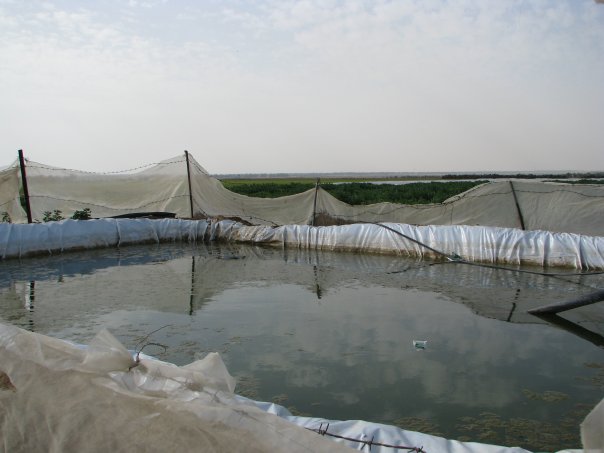
Gazans always have to come up with new solutions for surviving. This plastic irrigation pool is one of them, the tunnels are the other ...
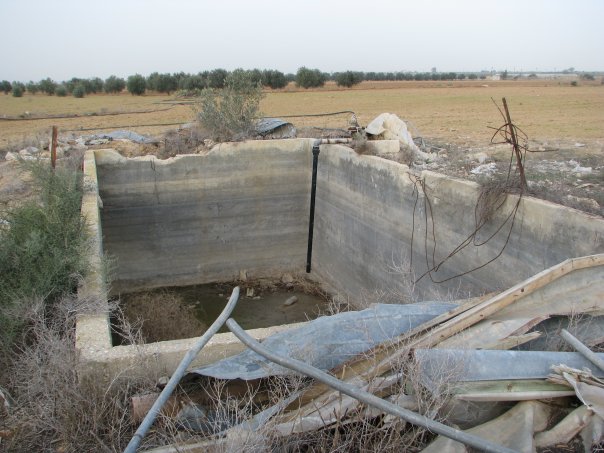
This bombed concrete water tank is about 500m from the border.
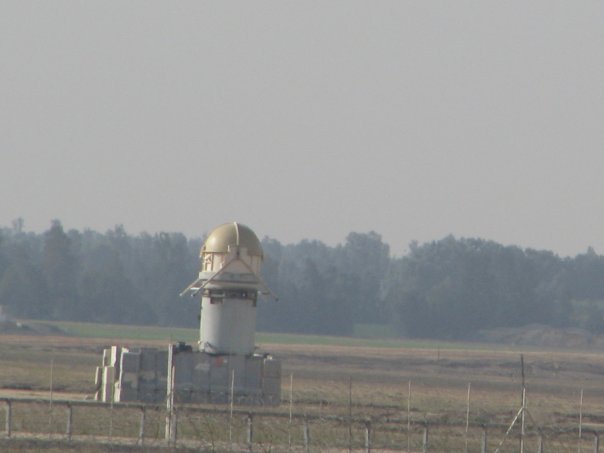
This is an unmanned automatic tower which lines the border at regular 1 km intervals. It opens like a (nasty) flower if movement is detected and it can fire by remote control. And than Israelis talk about the Gazans' hand-made Qassam rockets being a serious threat!
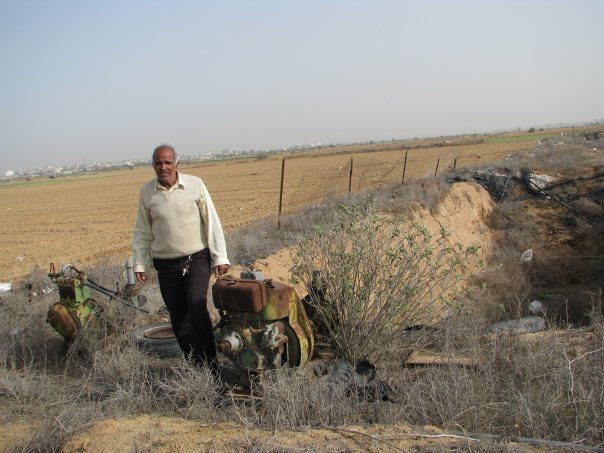
This farmer is showing two motors he used to use to water the fields. One was brought over all the way from India. Now they have both rusted away.
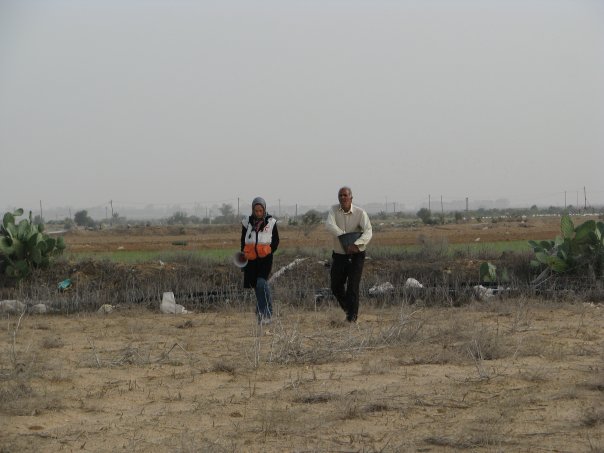
My colleague from the ISM walks next to the farmer for his protection as he sows his wheat.
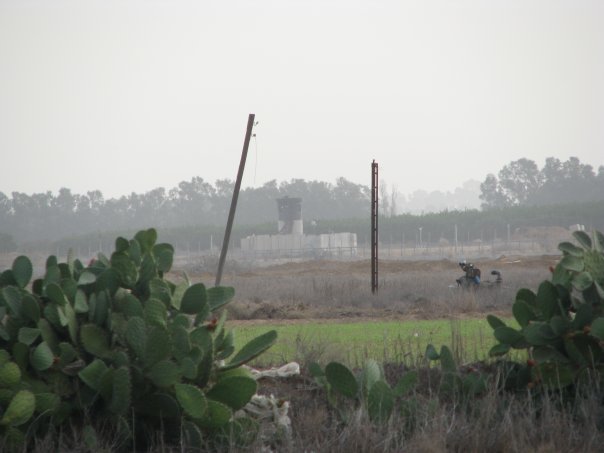
These watchtowers are scary. The soldiers observe from them and if farmers turn up to work they send the jeeps over.
Report from Gaza: Power cuts, donkeys and 404s
The following was written by Rada Stojanovic, a Viva Palestina member who stayed behind in Gaza after the convoy left.
On Tuesday 26 January, the eight-hour daily electricity cuts were replaced by 12-hour ones, and then, on Wednesday, the news came that there will be no electricity at all because Gaza had run out of the diesel needed to run its power stations. People were saying that Israel was refusing to allow diesel and it later turned out that that was only a smaller part of the problem.
From what I could gather from Al Jazeera in Arabic and from talking to people, until January, Gazan electricity was paid for by the European Union (EU). The EU decided some time ago that they could not afford the expense in the times of economic downturn and duly informed Gaza and Ramallah about it. Because the Gazan government could afford it even less, Gazans were plunged into darkness for a whole day and a bit until Ramallah decided last Thursday to buy them some electricity from Israel and Egypt.
I doubt that this would get Abu Mazen (Mahmoud Abbas) any brownie points in this place, where many believe that he would gladly see them die just to get at Hamas. He does not do himself any favors when he says that Egypt is right to be building a metal border wall which will go deeply into the ground and cut the tunnels which are preventing starvation in Gaza.
“Egypt is a sovereign state and the Gaza-Egypt trade should be taking place through the border crossing”, he said to a Guardian journalist recently, and one wonders what planet he lives on. He must know that Egypt keeps the border crossing with Gaza firmly shut most of the time, and that statements like these only make Gazans like Hamas even more.
So now we are on a ’12 hours off, 8 hours on’ regime. It is 11.30pm on Monday 1 February and I am sitting in the dark with the lamp and typing away.
Not everybody sits in darkness though. It is always the poor (and the poorer internationals) who suffer most. The UN building across the street is as well lit as ever, so at least our street is never pitch black.
The diesel powered generator salesmen are doing a roaring trade these days, selling electricity producing machines that look like the grass cutters, at 300 dollars or more apiece. The moment the power is cut, an almighty buzz of many generators starts. This is definitely the sound of Gaza nowadays, just like jazz is the sound of New Orleans. There are worries that soon diesel will become even scarcer (it is already in short supply) and that equality amongst Gazans will be established with nobody having electricity during the cut times.
At the same time, cooking gas is becoming more difficult to come by, and I have seen containers being sold by the road for the first time since I arrived almost a month ago. The combination of no electricity and no cooking gas is going to make lives of Gazans very difficult, no matter how used they are to coping with abnormal life conditions. But than again, the tunnel trade will probably respond to the increase in demand by increasing both supply and prices. And if Abu Mazen’s wishes regarding the Egyptian wall come true, god only knows what will happen to 1.5 million besieged and imprisoned Gazans.
What people who have money do when there is no regular supply of basics is – stock up. Firefighters form the Civil Defense and Red Crescent staff told me that there has been a sharp increase in the number of fires and related injuries caused by people stocking diesel and gas in their homes.
Good old miniature white donkeys, the kings of Gazan streets, are so not affected by all this and are everywhere pulling enormous weights. Day and night, they whiz between the posh four-wheel drives and less fancy battered old cars, such as the long forgotten (in Europe) Peugeot 404s, which I am told used to be taxis taking Gazans to work in Israel years ago.
Peugeot should come to Gaza to make a commercial about the quality and durability of their cars. It would be a very exotic commercial with dusty bustling streets, bearded traders and shoppers, and Peugeots and donkeys as indestructible survivors. I can see it in my head! I must write to Peugeot and sell them the idea – with all income going to the (International Solidarity Movement) ISM!
I particularly like the Peugeot 404 pick-ups, which I have never seen before. A friend who is a vintage car enthusiast , and who has beautifully restored the 10 oldest cars in Gaza (must write about this some other time), told me that initially Gazans bought Peugeots because they were good cars, but also because they could easily get spare parts for them in Israel and from each other.
Gazans can keep anything going, but, unfortunately, what is happening to them feels like a vile experiment in how much they can endure, day in day out.
PS by Joti: I was speaking to a friend in Gaza over the weekend, and he told me that he spent his whole day off trying to buy cooking gas, but, for the first time, couldn’t find any. Since there’s no electricity and no gas for cooking, he must now try to buy (very expensive) ready-cooked food from the market for himself and his pregnant wife. If this is difficult for him, how much harder must it be for the majority of Gazans, who don’t have jobs?
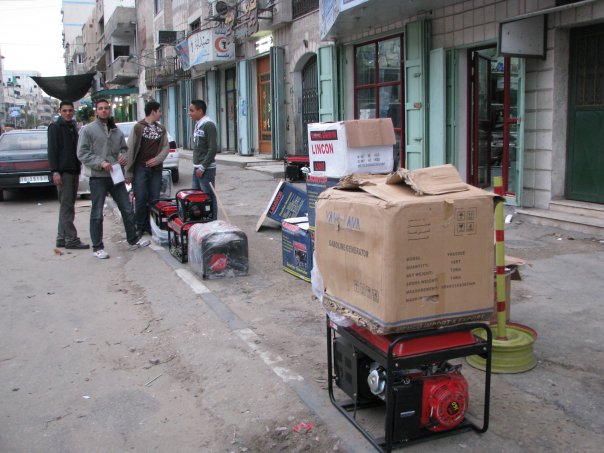
Generators for sale on the street in Gaza
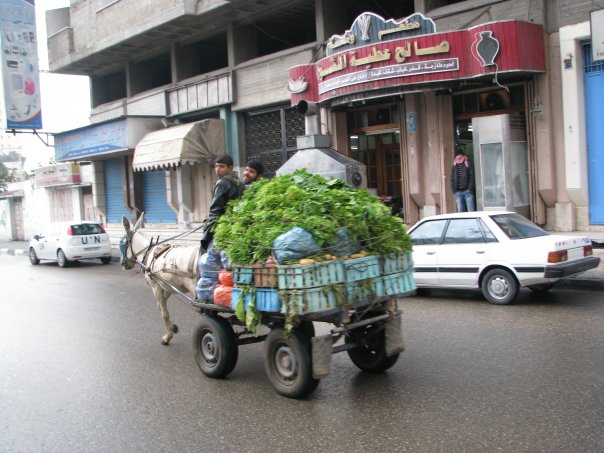
Donkey cart piled high in a Gaza street
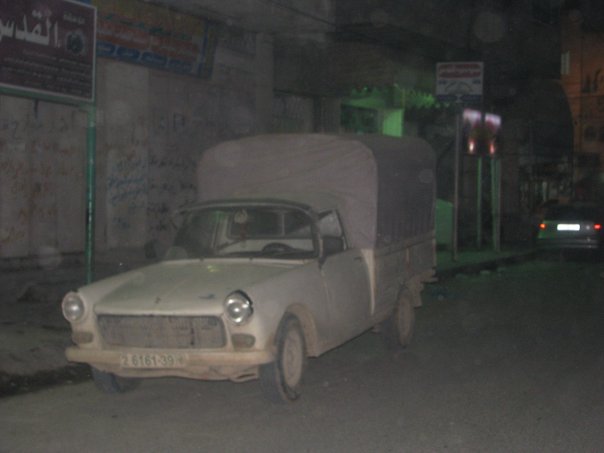
The great survivor: a Peugeot 404 pick-up
Some speaking dates
I will be speaking at a few meetings in the next fortnight. Details are below.
:: Film showing and discussion organised by Hackney PSC, London E8
Tuesday 26 January at 7.30pm. Doors open 7.00pm. Free entry.
To Shoot an Elephant (2009), 112 mins, dir. Alberto Arce & Mohammad Rujailah.
An eye witness account from the Gaza Strip during Israel’s military assault one year ago. The only foreigners who stayed inside Gaza, a handful of international volunteers, give witness to the bravery of a group of Gazan ambulance drivers as civilian lives and the infrastructure of Gaza are destroyed.
When I Stretch Forth Mine Hand (2009), 3 mins, introduced by filmmaker Omar Hamilton.
A dialogue between poem and image that explores personal and political tensions born of Egypt’s role in the assault on Gaza.
Plus: a discsussion with Joti Brar, a Hackney resident recently returned from the PSC Viva Palestina aid convoy to Gaza.
Venue: Passing Clouds, Richmond Road, Dalston E8 4AA, junction with Kingsland Road (behind the Haggerston bar).
Buses: 67 149 242 243 / nearest tube Old Street.
:: Viva Palestina convoy report-back meeting organised by CPGB-ML, Southall, UB2
Saturday 30 January at 6.00pm.
Confirmed speaker: Joti Brar
Also invited: Kevin Ovendon (Viva Palestina) and Anas Altikriti (British Muslim Initiative)
Followed by questions and discussion.
Venue: Saklatvala Hall, Dominion Way, Southall, UB2 5AA
:: Viva Palestina convoy report-back meeting organised by CPGB-ML, Central Bham
Wednesday 3 February
Confirmed speaker: Joti Brar
Others: tbc
Time and venue: tbc
In Gaza: one precious day
We woke on the morning of Thursday 7 January to discover that our hotel backed onto a beautiful Mediterranean beach. The day was sunny and bright, but the halcyon vision presented by the little fishing boats dotting the near sea was blighted by the realisation that the long grey smudge on he horizon was an Israeli war ship. This reminded us that Palestinians are not in control of their own coastline; many beaches are mined, and fishermen who venture more than a mile or two out to sea in search of a decent catch are routinely shot at.
After breakfast, I had an interesting conversation with a few Palestinians who were chatting over coffee and shisha in the hotel dining room. They were among the few young Gaza residents lucky enough to have work, although tellingly enough, their jobs were all in the ‘aid sector’.
Among other things, they talked about how difficult the siege had made it for Hamas to deliver on any of their election promises of three years ago, and of the debilitating effect on the whole community of the fighting between Hamas and Fatah, which meant that many political leaders were in hiding, and added an extra layer of paranoia and complication to an already dire situation. They reiterated, as many friends in the camps had done, the need for national unity in the face of the Israeli occupation and siege, as the basic precondition for any effective resistance or negotiation.
After this, a bus came to take us back to the car park where we’d left our vehicles the night before, so we could pick up the rest of our personal belongings and hand over the keys to the aid distribution committee. Through this committee, the Swansea aunties had requested that our little bus and the medical equipment it carried should be passed on to a hospital in Jabalia refugee camp in the north of the strip.
Frustratingly, for the coach I was on at least, the planned trip to the northern areas, which would have taken us to refugee camps and places particularly badly damaged during last year’s massacre, was cancelled at the last moment, and we were instead diverted to an open-air rally held on the site of the bombed Legislative Council building in the heart of Gaza city. Several Palestinian MPs were killed during Israel’s assault on the building, which left only a small section of the structure standing. The rally was addressed, among others, by George Galloway of Viva Palestina and Bulent Yildirim of the Turkish IHH.
No English translation was provided of the other speakers, but brother George thanked the people of Gaza for their incredible welcome and their steadfast resistance, saying, “We will never give up trying to come to your side for as long as you refuse to surrender.”
He went on to say that the Palestinian struggle had become synonymous with freedom, and that the Palestinian flag had become the flag of all freedom-loving people in the world. He talked of the future convoys being planned in Malaysia, South Africa and Venezuela, and of his own hopes of returning by sea on a flotilla of siege-busting ships.
Referring to Egypt’s attempts to scupper the convoy, and its role in the siege generally, Galloway said that the people of Egypt deserved better than the bad government in Cairo. He called on Hosni Mubarak to change his compliant policy and stop building the wall of shame ordered by the US in order to try to squeeze the remaining life out of the people of Gaza.
Talking of the unintended consequences of the delays forced on the convoy, George emphasised the strong bond that had now been formed with the Turkish IHH and its leader Comrade Bulent, who he described as a “great lion”. He said that he and Bulent had made a British-Turkish pact in Aqaba that Viva Palestina and IHH would work together until the siege is over and Jerusalem in the free capital of a free Palestine.
After this rally, we spent a little time looking around the ruins of the Legislative Council building, before moving to a nearby cultural centre, where a big reception for the convoy had been organised by the government, and was due to be addressed by Ismail Haniyeh, the prime minister. While waiting for this to start, however, I heard that one of our good friends from D7 (aka, the Derry boys) was in hospital round the corner, suffering from a particularly nasty attack of the gastro bug that had been doing the rounds of the convoy since Latakia.
As the hospital was so near, I siezed my chance for an unscheduled walkabout and took myself off up the road to check he wasn’t too seriously ill, or to miserable at wasting his precious time in Gaza on a sick bed. Since it was getting dark by this point, my clothes weren’t obviously foreign and my head was covered, I managed to be relatively inconspicuous, and it was a real joy to walk unaccompanied and unnoticed, just one more body amongst the bustling street scene.
Looking at the cheerful, busy people all around, there was surprisingly little evidence in their faces of the harsh realities of life in Gaza. It was hard to imagine that, since the bombardment of the infrastructure last year, drinkable water has become a rare and precious commodity here; that electrictity cuts take place daily; that local industry has ground to a halt; that more than 80 percent of people need food aid to survive; that most of the few remaining jobs are for the government or for aid agencies; and that almost all children in Gaza are suffering from some sort of psychological damage as a result of having seen friends and relations killed and of living with the ever-present threat of further bombing.
Arriving at El-Shifa Hospital, I had no difficulty finding the patient; doctors and nurses were falling over themselves to be helpful and friendly. And while we were chatting in his room, there was a constant stream of visitors, as various people working in the hospital came to shake the hand of a convoy member and thank him for coming to Gaza.
Not long after I arrived, a doctor told our man he could be discharged, so I hung around and we walked back to the cultural centre together, arriving just as the meeting ended and the audience spilled out onto the steps and the street below. Within two minutes of getting there, I was surprised to hear my name being called by two Palestinian boys nearby. I was amazed to discover that these were Gazan students who had joined my Facebook group and had been following the convoy’s journey online. Knowing where we would be, they had come down to say hello and had recognised me from my profile picture!
We chatted and took pictures on the steps, and the boys presented me with a little enamel Palestinian flag badge. They then introduced me to their friends, who were all keen to thank the convoy for coming, as well as to explain that the solidarity shown in highlighting their cause and breaking the siege was what they really needed even more than the aid itself, however valuable that was. They stressed again that they do not want the world to see them as a charity case, but as a dignified people wronged by great powers and fighting with principle for their rights.
There were so many conversations going on on the steps of the cultural centre that it was impossible to focus on just one for any length of time. People were flitting around, greeting each other excitedly and trying to cram as much interaction as possible into an all-too-brief hour. Before we knew it, buses were leaving for the hotels and we had to rescue our luggage and say goodbye to our new friends. Then it was back to hotels for showers and a rest before calling up a friend who had promised to take us out and show us a bit of Gazan nightlife.
When we finally got out again, the town was strangely quiet. We soon discovered why. Sitting in a nearly empty caff eating shwarma and houmous, we heard on the radio that Israel was at that very moment dropping bombs just a couple of miles away. Israel regularly targets other parts of the strip, but this was the first time since last year’s bombardment that anything had been dropped on the city itself. As several Palestinians remarked to us: “Israel has prepared a warm welcome for you.”
Intial reports indicated that no-one had been hurt, but we heard later that three people had been killed and another badly wounded. We also heard about a 17-year-old boy who had been crippled for life by an Egyptian bullet in the back that he received while waiting for the convoy to arrive at the Rafah border.
So we went back to our hotel, to sit up drinking tea, smoking and talking; reluctant as ever to go to bed and miss out on anything interesting, despite being ridiculously tired. When we finally turned in around 3.00am, we had been promised that coaches would collect us at 8.00am to take us on the tour of the strip we’d missed out on the day before, but it was not to be. The next morning, we had fresh orders: Egypt was threatening to re-arrest the seven convoy members who had been released as part of the deal struck the morning after the fighting in El-Arish, and we were all being evacuated post-haste to the border while embassies were contacted and fresh negotiations started.
So before we knew it, after just one day in Gaza, we were on our way back to the border, with no chance to say goodbye to any of our new friends, to look around at the city or the rest of the strip, or to meet up with any of the other contacts we had been provided with before we arrived. It was just one more part of Egypt’s petty revenge on the convoy, but, frustrating as it was to be forced to leave again so soon, nothing could take away from the reception we had been given by the Palestinians or change the fact that the siege HAD been broken, and Egypt’s role in that criminal blockade had been laid bare before the world.
Things we have learned since the last things:
1. Even though they’ve already been waiting for days and most of the convoy has now passed, some lovely souls will still wait out in the middle of the night to greet every last vehicle. This is very cheering to those poor fools at the back who have managed to miss all the fun and fanfare of the big arrival at Rafah.
2. If you’re tired enough, and have a chair to sit on, it is impossible to bring yourself to care whether you have a bed for the night or not at 3.00am. If someone offers you a cigarette and a cup of tea, you will quite happily wait another hour in the hope that someone else has the energy to sort the situation out.
3. For a war zone, Gaza is really amazingly peaceful and civilised, and its resilient people are embarrassingly hospitable. Convoy members who made it to the camps reported that even there, in the midst of tremendous poverty, the people were exceptionally friendly and plied them constantly with food and drink.
4. In trying to dehumanise the Palestinians, Israelis have only succeeded in dehumanising themselves. In the face of intolerable difficulties, Palestinian society is remarkably cohesive and smoothly-run. Meanwhile, the Israeli army tells its soldiers that Palestinian babies are enemies in waiting who deserve no mercy and deliberately targets their schools, hospitals, mosques and homes.
5. In Palestine, it is really true that ‘Existence is resistance!’
6. A visit to a Gaza hospital will show you why Palestinians need medical aid in particular. Even the main hospital in Gaza city is pretty-well empty of all the usual equipment and sanitation aids you expect to see in a modern medical establishment. A single room consists of a bed, a stool or two and a basin, but the walls are clean and the floor is swept.
7. Simple steps to outing a discreet minder: wander off somewhere without telling anyone; force minder to locate you; minder will then have to get others to translate in order to find out what the flip it is you think you are doing wandering off.
8. It turns out Hamas minders are exceptionally sympathetic and cooperative. Although clearly itching to get us back to where we were supposed to be, ours very politely waited around for hours while we gossiped in the hospital. He wasn’t even cross when we gave him the slip and finally wandered back to the meeting without him.
9. Despite a lack of high-end medicines and medical equipment to treat complicated surgical or acute medical cases, and despite having no access to advanced levels of training, the Gazan medical establishment does somehow continue to function. Every doctor and nurse we met was friendly and helpful, and determined to continue with their work.
10. When visiting a sleeping patient, polite people tend to sit quietly and read a book. Those less skilled in the art of self-effacement, on the other hand, will barge in, shake the patient awake, invite all and sundry inside, and proceed to turn the hospital room into a party zone. It is a moot point which of these approaches is more appropriate.
11. As I may have mentioned before, unexpected presents are the best, especially when given by new friends. Some of the little things I have been given on this trip have more significance to me than most of the contents of my house.
12. It is embarrassing to be called a hero when all you have done is take advantage of your privileged position as someone from the imperialist world to have a slightly extended holiday and visit some interesting places and people on the way to a destination that is denied to the millions who ought to be living there, but apparently open to the rest of the world.
13. The hassles we went through in getting our aid to Gaza were as nothing compared to the tribulations faced by Palestinians every day. They welcomed us as heroes, but no-one on the convoy was in any doubt as to who the real heroes are.
14. Despite all the attempts to divide, dishearten and demoralise us, there is no-one on the convoy who wouldn’t love to go back to Gaza.
Joti 2 Gaza Facebook group
Let Us Study Facebook group
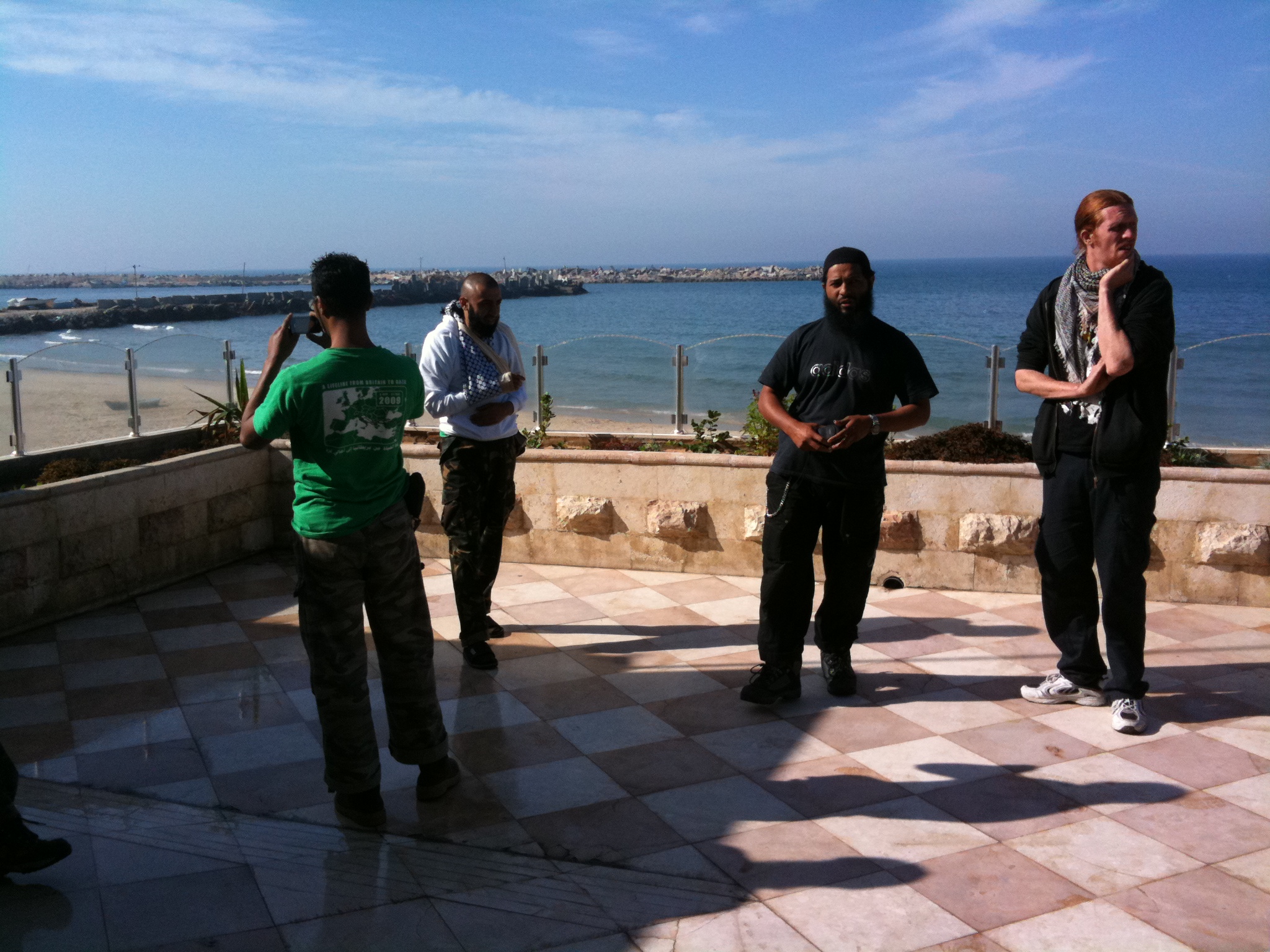
Dazed and confused: no-one told us it would be so bright and beautiful here!
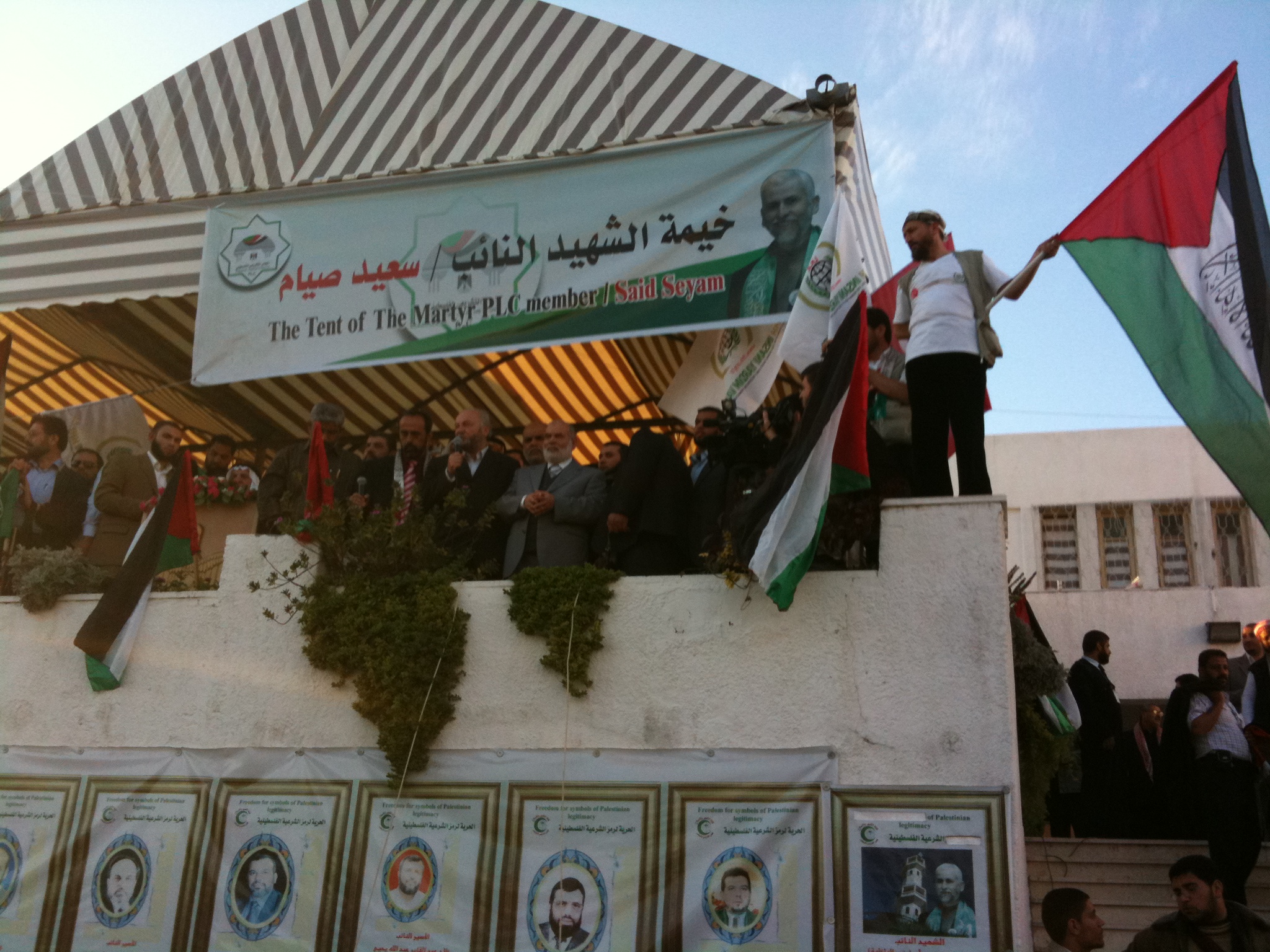
Galloway addresses a rally at the ruined Legislative Council building in Gaza city.
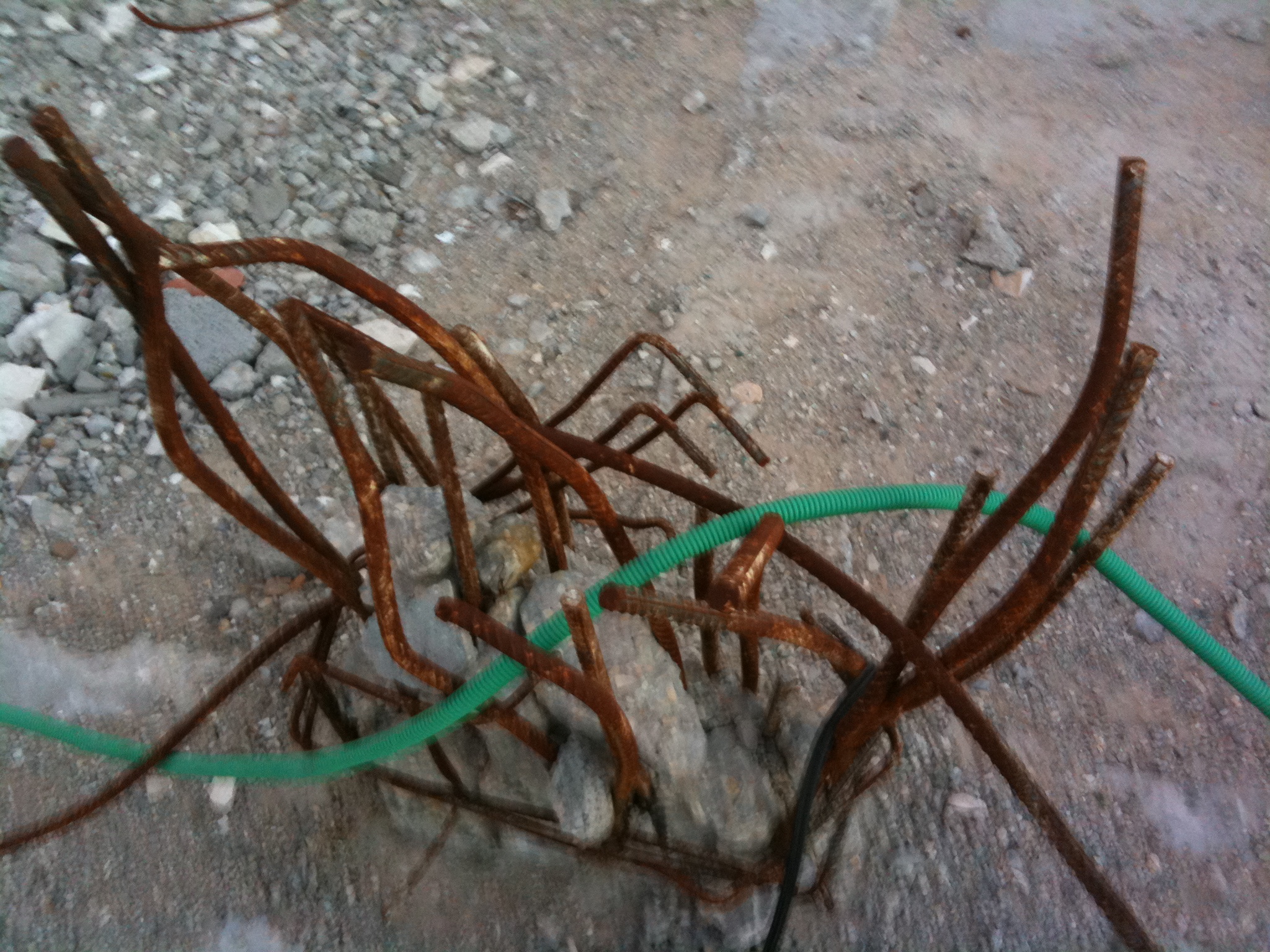
Builings have bones: much of the rubble has been cleared away since last year's bombardment, but there are lots of half-ruined buildings showing innards like these.
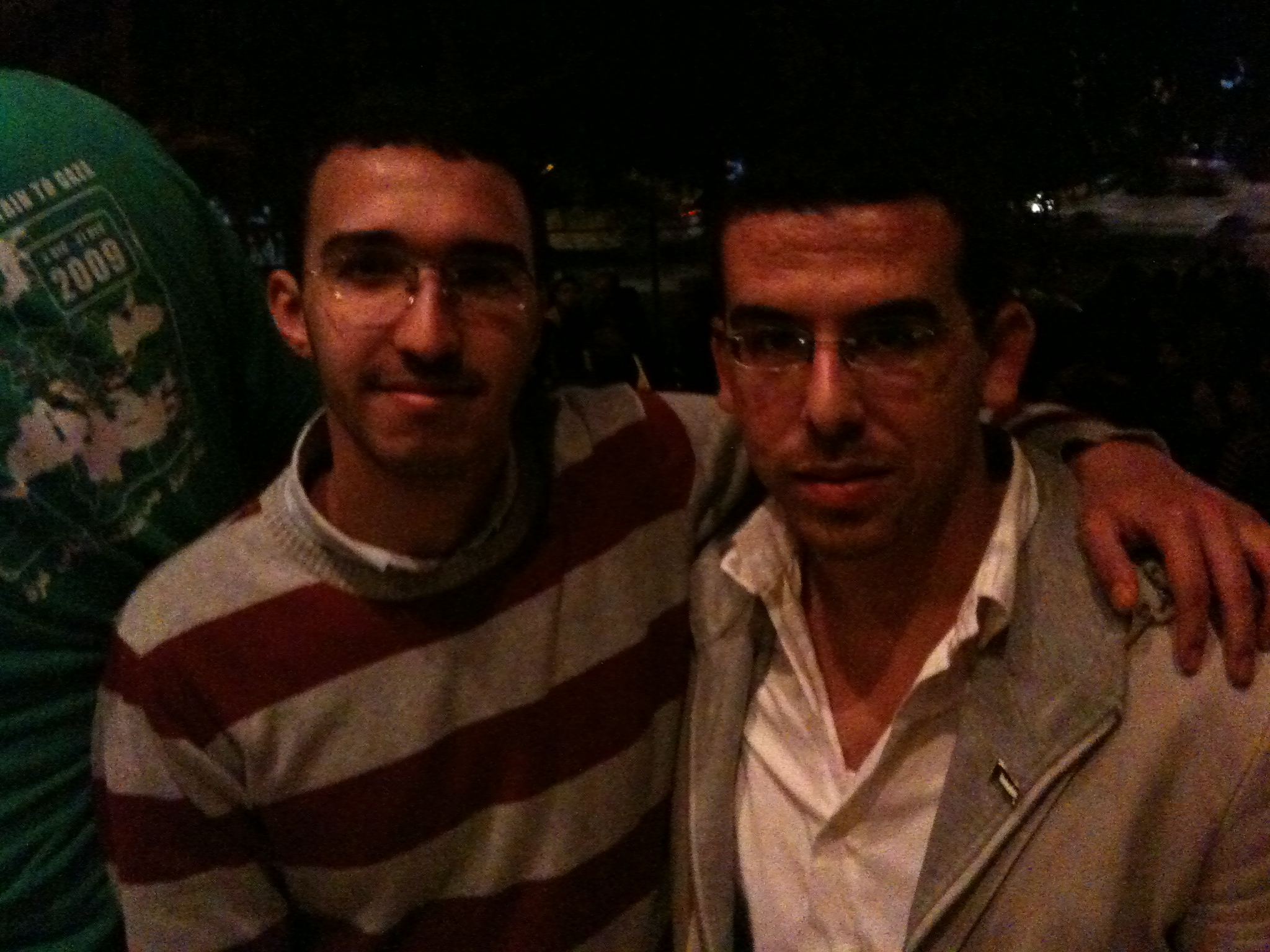
My Facebook friends!
All the photos
… can now be seen on Flickr. Enjoy.
http://www.flickr.com/photos/joti2gaza/sets/72157623262044584/
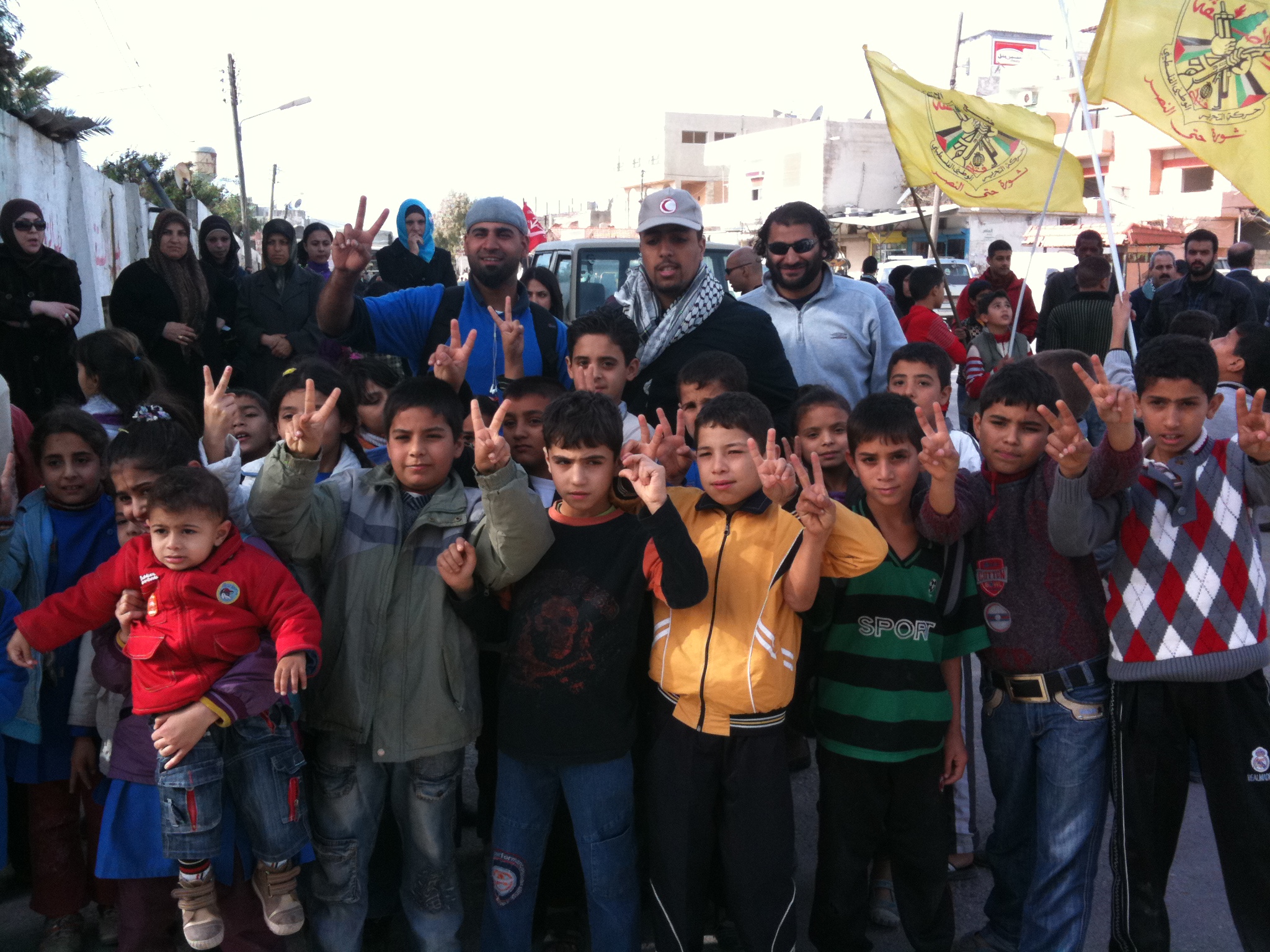
Children from Latakia refugee camp in Syria come to wave the convoy off.
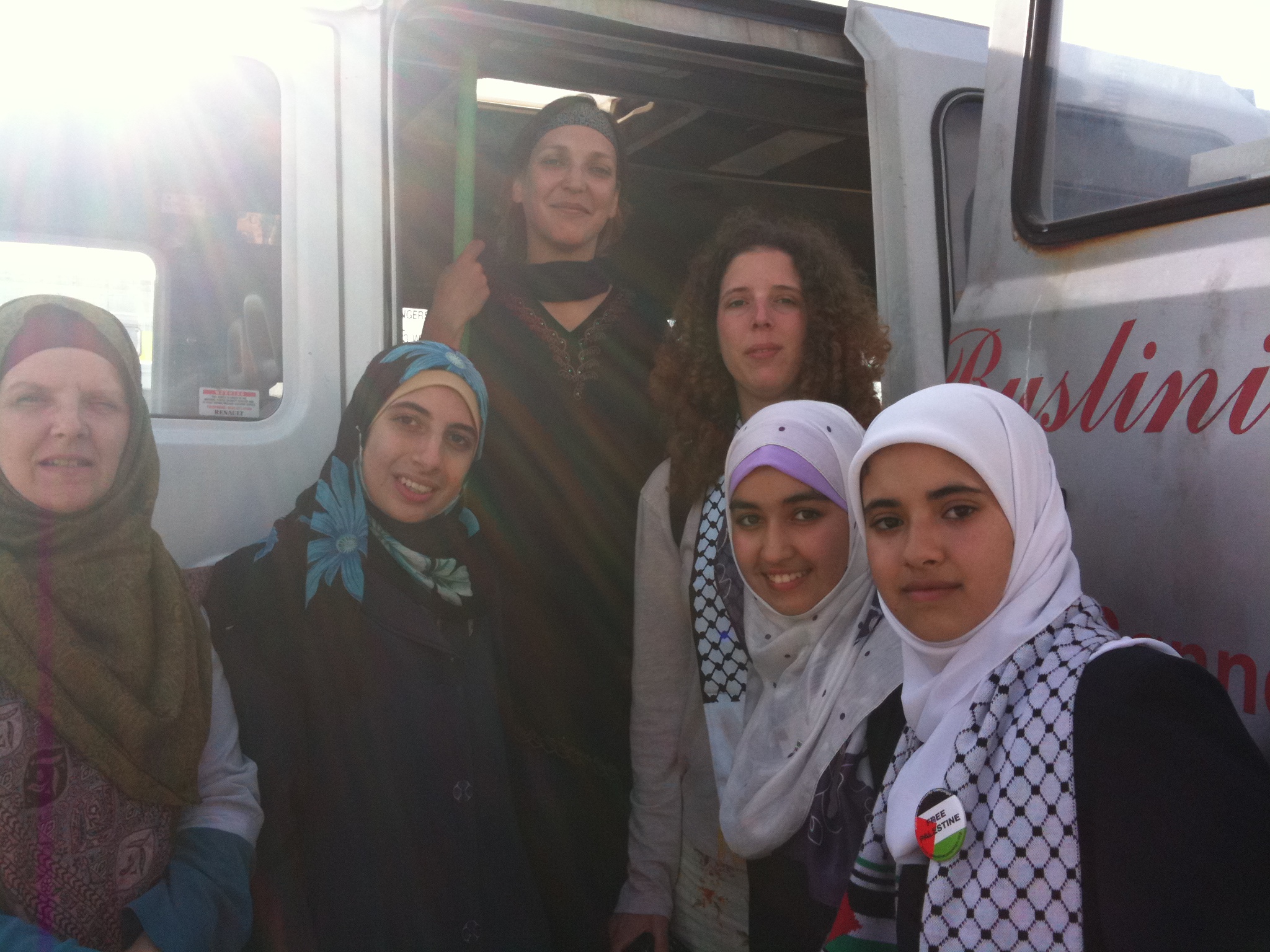
Aunties say a fond farewell to the little bus that made it all the way from Swansea to Gaza.
The final countdown: tedious days and eventful nights
Well what with one thing and another, getting this blog updated turned out not to be possible once we left El-Arish. Am back home now, so will catch up over the next 24 hours or so.
On Christmas Eve, we were only half a day’s journey away from Gaza. Two weeks later, we were just a few miles, but nobody knew how many hours or days from our destination.
Despite the full glare of middle-eastern press scrutiny, and the diplomatic backing of the current Turkish and former Malaysian prime ministers, Egypt continued to throw every possible obstacle into our path. Clearly, the Egyptian government and its western/zionist allies have no desire to see more convoys coming through, constant remiders to the Arab people that without Egypt’s cooperation, Israel would be unable to maintain the siege, and there would therefore be no need for convoys.
On Tuesday night, as the sun went down on another unpredictable day, the convoy was all together in El-Arish port, hoping that during the night or early in the morning, we would be allowed to make the short drive down the road to the border at Rafah. After all the delays and extra costs, Gaza was only 40km away, but there were more unpleasant surprises in store for us, when the local authorities walked out of negotiations about which vehicles and aid they were prepared to allow into Gaza. Instead of returning, they sent 2,000 uniformed riot cops and non-uniformed provocateurs to surround the port, blockading us in and then attacking those protesting at the gates with paving slabs and more.
So rather than sleeping or driving to Gaza, much of the convoy spent the first half of the night in a pitched battle with Egyptian police, who used pepper spray, water cannon, rocks and metal batons against a couple of hundred of our volunteers. Middle-eastern TV broadcast five hours of live coverage of the battle into homes across the region, exposing still further the criminal role of Egypt in the siege of Gaza.
Fifty-five convoy members were wounded during the fighting, several of whom had to be taken to hospital for treatment, being beyond the scope of the ad hoc first aid station we set up within the port compound. Six brothers of various nationalities were arrested and held all night and most of the next day in a police van without food, water or toilet facilities.
The next morning, Viva Palestina announced that negotiations at the highest level, between the Egyptian and Turkish prime ministers, had failed to persuade the Egyptians to let all our vehicles in, so cars and 4x4s requested by doctors and clinics could not be delivered to Gaza, but will instead be taken by Turkish drivers to refugee camps in Syria and Lebanon. All the people and the rest of the aid were finally agreed to, though, so then it was just a question of waiting for the army to open the gates and let us out onto the road to Rafah.
Of course, that wasn’t straightforward either. Having kept us hanging about all day under the impression that we’d be leaving any moment, the Egyptian authorities only started to let the first convoy members through as the sun was going down, some time after 4.00pm.
Our last hours at the port were cheered by the arrival of a few local lads, who came to give their support to the convoy. They told us how ashamed they were of their government’s actions, and explained that it did not speak for all, or even most, of the Egyptian people. Coming from Britain, we had no trouble identifying with their sentiments!
By 10.30pm, while some people had already been in Gaza for hours, many more of us were still waiting to have our passports checked by customs before finally leaving El-Arish. Which meant that for a sizeable section of the convoy, including us aunties, the cheering crowds that lined the roads from the border all the way to Gaza city, and who had been waiting for us for days, had finally gone home before we turned up between 1.00 and 2.00am.
It was sad for us to miss that welcome, after we’d waited so long to get to Gaza, but in the end, this trip was never about us. Knowing we had made it across the border and broken the siege; knowing that we had been part of a movement to highlight the siege of Gaza and the occupation of Palestine; knowing that we had succeeded in delivering some real solidarity to the heroes and heroines of resistance in Palestine, and a message of defiance to the apparently all-powerful forces of oppression – these thoughts kept our spirits high, even as our sleep-deprived bodies wilted and sagged.
When we finally tumbled into a very welcome hotel bed, our last thoughts were that, strange and surreal as our arrival may have been, we had made it into Gaza, against all the odds, and nothing that happened after could change that.
Some new things we have learned:
1. If you are expecting to get into a fight with well-equipped policemen, a certain amount of preparation would probably be helpful.
2. In a conflict situation, it is generally a good idea to have at least one first-aid station set up BEFORE the first cracked head returns from the fray.
3. Lemon juice is a good antidote to tear gas.
4. When you are bandaging someone’s head, it is preferable to find a way to do it that doesn’t involve throttling them.
5. If a hostile power wants to mess with your morale, they will keep you kicking your heels all day long and only let you move at night, once you’re really tired and frustrated.
6. The Egyptian government does not speak for the Egyptian people. With a bit of luck and a lot of agitation, its days of doing the US and Israel’s dirty work in the region will be numbered …
Crisis: riot cops face convoy in El-Arish
Latest press release from Viva Palestina. Currently in peaceful sit-down protest, but surrounded by riot cops with water cannon. Please take action now!
To all friends of Palestine
Our situation is now at a crisis point! Riot has broken out in the port of El- Arish.
This late afternoon, we were negotiating with a senior official from Cairo, who left negotiations some two hours ago and did not return. Our negotiations with the official were regarding taking our aid vehicles into Gaza.
He left two hours ago and did not come back. Egyptian authorities called over 2,000 riot police, who then moved towards our camp at the port.
We have blocked the entrance to the port and we are now faced with riot police and water cannons and are determined to defend our vehicles and aid.
The Egyptian authorities have, by their stubbornness and hostility towards the convoy, brought us to a crisis point.
We are now calling upon all friends of Palestine to mount protests, in person where possible, but by any means available to Egyptian representatives, consulates and Embassies to demand that the convoy is allowed a safe passage into Gaza tomorrow!
Kevin Ovenden
Viva Palestina Convoy Leader
———————
Alice Howard
Viva Palestina UK – Administration Manager
Tel: 07944 512 469
Email: alice@vivapalestina.org

Waiting and more waiting beside the sea
Christmas Day was marked by convoy members in various ways. Muslims went to Friday prayers in the local mosque during the day, and an interfaith candlelit ceremony was held on the steps of the local Greek orthodox church after dark.
Meanwhile, one convoy member, dressed as Santa, appeared on Al Jazeera explaining that Gaza was the only part of the world where he had been unable to deliver presents that morning.
The general feeling was one of optimism, but there was much anger at the continued news blackout in the mainstream British media, and frustration at the closeness of our final destination. While the convoy’s situation and the plight of Gazans under siege was the lead story on Al Jazeera and many other middle-eastern TV networks, the British corporate media preferred to fill their air time/print space with items of such vital import as the potential life expectancy of a fascistic old Pope and the unexpected arrival of snow in winter.
In the evening, a large contingent of volunteers gravitated towards the beach, where the sounds of singing and general merriment drew a crowd of locals into the party.
Boxing Day was a day of rest for those not busy in internet cafes, but by 27 December, the anniversary of last year’s war on Gaza, and the date on which the convoy had hoped to arrive in Palestine, the mood had changed.
We marked the anniversary of the start of the war with a three-minute silence at 11.20am, which was broadcast live by Al Jazeera and covered by several other TV networks, including our embedded Turkish, Malaysian and Press TV crews. The names of the 15 martyred medics, deliberately targeted during the Gaza assault as they tried to reach the wounded, were read out in turn, along with the dates of their deaths.
Following this tribute, we left the compound and staged a solidarity protest at a major road junction nearby. Around 20 members of the convoy also started a hunger strike to highlight the plight of those going hungry in Gaza every day, and to protest at Egypt’s refusal to allow the convoy into Gaza via Nuweiba.
After the main solidarity demonstration, a smaller protest took place outside the Egyptian consulate in Aqaba, while on the beach more convoy members took Viva Palestina banners out into the Red Sea and onto the pier.
That evening, candles were lit to commemorate the 1,400 people killed during Israel’s 22-day assault on the Gaza Strip. Having missed the main vigil, a few of us staged another, smaller one down by the beach later on.
The hunger strike was called off the next afternoon following news that an agreement had been reached with Egypt that we would agree to travel via the Mediterranean port of El-Arish instead of the Red Sea port of Nuweiba in return for an undertaking to let all the aid and all convoy members into Gaza once we arrived in Egypt.
So back we drove, all the way through Jordan and into Syria once more, arriving late on the 29th at the Sahara hotel complex in Damascus, while Viva Palestina scoured the Med for a boat or three that would be able to get all the vehicles and all the people across the sea and be suitable for landing in the low-tech, shallow dock at El-Arish.
Two days later, we were on the move once more, heading for Lattakia in Syria, where we were put up in the Palestinian refugee camp while further negotiations were conducted. Not only was it hard to find the right sort of boats, but there were many firms who simply didn’t want to get involved with shipping cargo that might upset Israel and possibly cause them to be attacked. Meanwhile, written confirmation of Egypt’s agreement to let us all in was proving elusive.
Two days later, a Turkish boat had been found that was willing and able to carry all the vehicles to El-Arish, the only snags being that it first needed to make its way from Libya to Lattakia, and that it was a cargo ship, which meant that separate arrangements would have to be made for the drivers. So while we waited for the boat to arrive at the port, the organisers got to work chartering a small plane that could shuttle us all in several trips to El-Arish.
In the end, we waited four days in Lattakia, but the wait was made easier by the spectacular hospitality and generosity of the people, both in the camp and the town. In the camp, Palestinian families were queueing up to take convoy members home for food and showers, offering us beds and generally treating us like long-lost relatives. In the town, Syrian stall-holders and cafe owners went out of their way to be friendly and helpful, making gifts of food, giving discounted rates for hotels and internet and generally proving by the intelligence of their conversation to be a very civilised, well-educated people.
A day and a half after we had loaded our vehicles onto the boat at Lattakia, Viva Palestina finally received written confirmation from the Egyptians that our planes would be allowed to land in El-Arish and that all volunteers would be taken to the port to be reunited with their aid. Of course, it didn’t prove quite that simple. The first plane-load to arrive found themselves issued with emergency exit visas and were told they would be taken straight to Rafah.
A night of negotiation coupled with spirited protest ensued (publicised by Al Jazeera), following which the customs officials backed down, cancelled the exit visas and took the volunteers to a hotel to await the arrival of the rest of the convoy.
Meanwhile, the second plane-load of volunteers was held up by engine trouble, which meant that the plane was diverted to Damascus airport and a replacement had to be found. On arrival at El-Arish, more shenanigans ensued as customs officials, having failed to stop three convoy members they had given advance warning would be refused entry to Egypt, decided to detain three others instead. A combination of negotiation and protest carried the point in our favour once again, however, no doubt helped by the pressure of the last group of volunteers who were queueing up outside the building to be processed, having just arrived at the airport.
So now, as the sun goes down on another unpredictable day, we’re all here in El-Arish port, people and vehicles reunited and aid all in tact (thanks, Shak!) After all the delays and extra costs, Gaza is only 40km away, but there’s no way of telling what other surprises the Eyptians might have in store for us, so we’ll be sleeping (or not) in the vans and waiting for the go-ahead tomorrow morning.
Some more things we have learned since the last things:
1. Just when you thought you’d got everyone sussed out, the convoy can reveal new friends to surprise and entertain you.
2. Some of these apparently nice people may turn out to be wolves in sheep’s clothing, however. Do not trust people who attempt to induct you into strange, massochistic, swearing-related rituals.
3. You cannot cure people of swearing by punching them repeatedly on the arm. Claiming to he hitting “with love” will not make the bruises any more acceptable.
4. The sky in Syria is always luminous.
5. Sloe gin is the official taste of Christmas and will liven up any bonfire party.
6. You are never too old to have a little dance around the fire on New Year’s Eve. Even if you thought you were, the moves will come back to you if you let them.
7. If it’s been a really long time since you danced, it’s probably a wise precaution to get all those nearby drunk before you start. That way, they’ll be too sahamed of their own behaviour to remember yours.
8. Conversation by the sea is a fine way to see in the new year. Be aware that the tendency to talk nonsense increases as the hours go by, however.
9. A sea breeze is the finest lullaby known to man, and will compensate for the lack of almost any other facilities. It is better to sleep in your clothes listening to the waves and the wind than to hide in some anonymous hotel.
10. The above point is especially true when you are surrounded by people offering to let you eat, shower and do your laundry in their houses.
11. Boats need good weather for sailing. This is not a conspiracy. Weather-induced delays are probably the one thing we can’t blame on Egypt or Israel.
12. An airport is not a fun place to sleep. This is especially true when said airport proudly and inexplicably advertises the fact that it is heated to a sauna-like 28 degrees all night long, and when attempts at sleep are regularly interrupted by announcements to let you know that you won’t be leaving any time soon and may as well get some sleep.
13. There’s a reason your mobile service provider sends you messages about how expensive data charges are when you’re abroad. Ignore them at you peril.
14. The modern world is strangely hard to navigate without a mobile phone/internet-ready device of some kind.
15. Without Egypt’s complicity, there would be no siege of Gaza.
16. Throughout our journey, the middle-eastern media has done a spectacularly good job of highlighting this fact. Every last detail of the difficulties made for the convoy have been detailed and discussed.
17. Muslim or not, the only phrase that properly sums up the state of mind arrived at when you have lost all faith in the ability of projected plans to come to fruition is “Inshallah”.
18. It seems almost impossible to believe that this time tomorrow, we will all be in Gaza … inshallah.
Viva Palestina convoy needs your help
A message from Viva Palestina
On 6 December 2009, the third Viva Palestina international aid convoy set off from London. Over the next few weeks it traveled almost 3,000 miles through nine countries gaining support as it went. By 24 December, Christmas Eve, when it reached the post of Aqaba in Jordan, it had grown to almost 500 people in 250 vehicles – carrying much needed medical aid for the besieged people of Gaza.
And there its journey could have come to an end. The convoy was refused passage across the Red Sea to the Sinai by the Egyptian authorities – gatekeepers of the Rafah crossing into Gaza. The convoy would only be allowed to enter Gaza if it landed at the port of El-Arish on the Mediterranean coast.
The convoy was forced to turn around and head back through Jordan and Syria to take ship from there to Egypt. But this solution, imposed by the Egyptian authorities, has come at a cost. Viva Palestina and our partners will need to charter a large cargo boat and a plane to move our vehicles and convoy members from Syria to Egypt. And we need to raise the money to pay for this.
So we are asking our friends and supporters to dig deep in their pockets and make an emergency donation towards the costs now facing the convoy. With your help we will once more deliver aid to the people of Gaza – and once more demand the end to this in human siege.
Thanks you for your support and may we wish everyone a Happy New Year.
——–
The Viva Palestina convoy is now steaming towards Egypt after facing down all efforts to delay or stop its mission to bring relief to the besieged people of Gaza.
The refusal by the government of Egypt to allow the convoy – now 200 vehicles strong – to pass last week across the Red Sea has meant that over $2,000,000 worth of aid has been kept from its recipients, charities and NGOs in the Gaza Strip.
The longer, more dangerous and more expensive route imposed by the Egyptian authorities also means that it will cost hundreds of thousands of pounds more to get the aid to the needy. That is money that should be spent on the sick and hungry.
George Galloway, who inspired the launch of Viva Palestina, says:
“Viva Palestina and the major Turkish charity IHH, which is a partner in the convoy, are appealing for funds to cover the punitive costs that have been imposed on the convoy thanks to obstruction and delays that have been imposed on it.
“Millions of people have followed this epic journey hour by hour on channels such as Al Jazeera and Press TV, or through websites, twitter and email blasts.
“They will have been enraged as they saw the attempts to prevent it reaching its goal. But we know from thousands of messages and the outpouring of public reaction in the Arab and muslim worlds that they too share the convoy participants’ determination to see the mission succeed.
“Now they, you, have a chance to help it do so. The convoy organisers are appealing for urgent funds to ensure that the additional costs are met and do not have to come from monies already pledged to help the Palestinian people directly.
“If you are inspired by this humanitarian convoy, but angry at the way it has been frustrated you now have a chance to show it.
“Please rush your donations to Viva Palestina or the IHH and send the people of Gaza a message that they are not alone as they live through the anniversary of a bombardment that claimed over 1,400 lives. Your donation will help get the aid convoy through.
“With your generosity the extra costs can be more than met and the surplus raised will go to charitable work in the Palestinian cause. What better answer could there be to those who wish this convoy ill than to rally to it and support it financially?”
All donations for the emergency appeal for the Viva Palestina Gaza convoy can be made through Viva Palestina and through the IHH. Please see details below.
1. Viva Palestina: HSBC Bank account number 41508458; sort code 40 04 24.
2. IHH – Insani Yardim Vakfi – The Foundation for Human Rights and Freedoms and Humanitarian Relief: T C Ziraat Bankasi A S account number 212 49 94 – 5012, iban code TR280001000488021249945012.
Convoy members on hunger strike for Gaza
The Viva Palestina convoy is still stranded in Aqaba, Jordan. It’s less than a day’s journey to Gaza, but the Egyptians won’t let us through.
As of 1120 this morning, I and 19 others are on a hunger strike in solidarity with the hungry people of Gaza. We will be joined by more volunteers every day until we are allowed to take our aid into Gaza via Rafah in Egypt.
It’s the anniversary of last year’s murderous attack on Gaza. The focus should be on Israeli war crimes, not on Egypt’s refusal to allow aid to pass through Nuweiba and Rafah.
Please write to local and national media, MPs, the Egyptian consulate etc, and ask your friends to do the same.
See posts below for contact details.
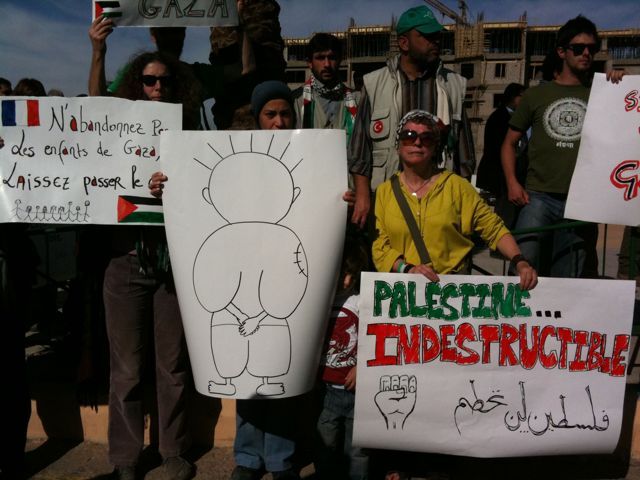


 Joti's journey to Gaza